Home › Common Problems › Cracked or Lifting Kitchen Floor Tile
Cracked or Lifting Kitchen Floor Tile
in Austin, TX
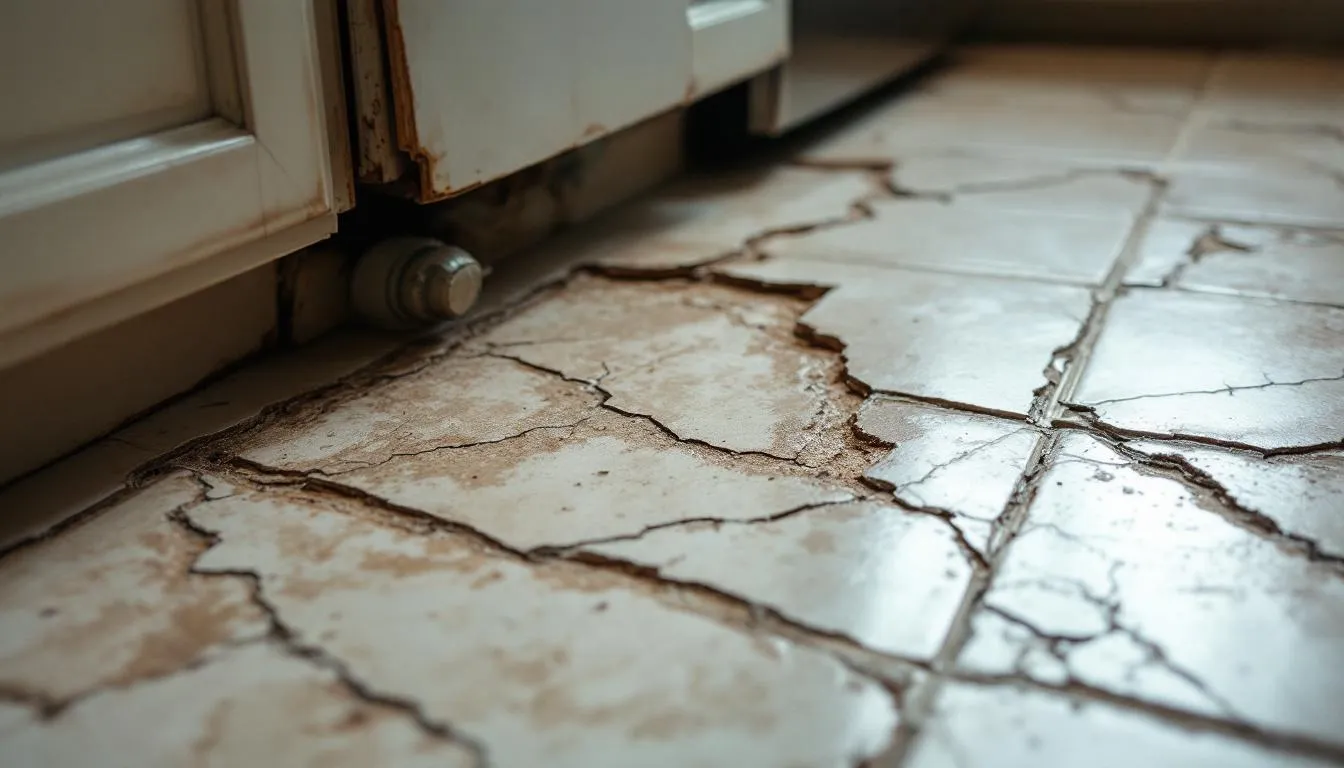
Cracked and lifting kitchen floor tile is a widespread issue across Austin, rooted in the city's expansive black clay soil — known locally as Houston Black Clay — that swells dramatically during wet winters and shrinks during the prolonged dry spells that define Central Texas summers. This constant movement transmits stress through the slab foundation directly to the tile and its mortar bed, breaking bonds and cracking grout lines. Homes throughout South Austin, East Austin, and the older neighborhoods north of UT are especially vulnerable, and ignoring the problem allows water to infiltrate under lifted tiles, accelerating both subfloor damage and future tile failure.
Telltale Signs
Warning Signs to Watch For
- Individual tiles crack diagonally across the face, often following the same directional pattern
- Hollow sound when tapping tiles near the center of the floor
- Grout lines cracking or crumbling in a grid or diagonal pattern
- Tile edges lifting slightly at corners or along grout joints
- Cracks appearing in groups near the kitchen perimeter walls rather than randomly
- New cracks appearing or worsening after heavy rain events or extended dry periods
Root Causes
What Causes Cracked or Lifting Kitchen Floor Tile?
Expansive Clay Soil Movement
Austin's Houston Black Clay shrinks and heaves seasonally, and even a well-built post-tension slab flexes slightly in response. When the slab moves even a fraction of an inch, the rigid tile-mortar bond cannot accommodate the stress and the tile or grout cracks, usually starting at the perimeter and working inward.
The Fix
Full Tile Replacement with Crack Isolation Membrane
Removing damaged tiles, installing a crack isolation membrane such as Schluter DITRA over the slab before setting new tile, and using a flexible polymer-modified mortar and unsanded grout creates a decoupled layer that absorbs future minor slab movement without transferring it to the tile surface.
Insufficient Mortar Coverage at Installation
Many Austin homes remodeled during the building booms of the 1990s and early 2000s had tile installed with insufficient trowel coverage — sometimes as little as 50 percent back-butter — which leaves tile corners unsupported. When foot traffic or slab flex stresses those unsupported corners, the tile snaps or pops free entirely.
The Fix
Spot Tile Removal and Proper Mortar Re-bed
Removing hollow tiles, grinding the slab surface clean, and re-setting tiles with full-coverage 95-percent minimum back-butter using large-format tile thin-set eliminates the unsupported voids and restores a mechanically sound bond.
Missing Perimeter Expansion Joints
Austin's extreme temperature swings — from below-freezing winter nights to over-100-degree summer afternoons — cause tile fields to expand and contract, and without proper expansion joints at the walls and doorways, that thermal movement has nowhere to go except into the tile or grout. This is especially common in kitchens where tile was run continuously from room to room without a break.
The Fix
Expansion Joint Installation at Perimeter
Removing the caulk or grout at the wall-floor transition, cutting a proper 1/8-inch to 1/4-inch expansion joint, and filling it with a color-matched flexible silicone caulk rated for floor movement provides the necessary relief zone so thermal expansion does not crack the field tiles.
Self-Diagnosis
Which Cause Applies to You?
Check the signs you're observing to narrow down the likely root cause before your inspection.
| What You're Seeing | Expansive Clay Soil Movement | Insufficient Mortar Coverage at Installation | Missing Perimeter Expansion Joints |
|---|---|---|---|
| Cracking follows seasonal patterns, worsening in summer dry months | |||
| Tiles sound hollow when tapped in the center but are not visibly cracked | |||
| Grout is cracked or missing only along the wall perimeter and doorway transitions | |||
| Diagonal cracks run across multiple adjacent tiles in the same direction | |||
| Tile corners lift or pop free without the field cracking | |||
| Tile buckling or tenting visible in a straight line across the room |
Free Inspection
Get a Diagnosis in Austin
An on-site inspection is the only way to confirm which cause applies to your property. Free, no obligation.
(737) 237-2363Free on-site inspection
Written estimate before work starts
Serving Austin & surrounding areas
Other Problems
Also Helpful