Home › Common Problems › Water-Damaged Kitchen Cabinets Under the Sink
Water-Damaged Kitchen Cabinets Under the Sink
in Austin, TX
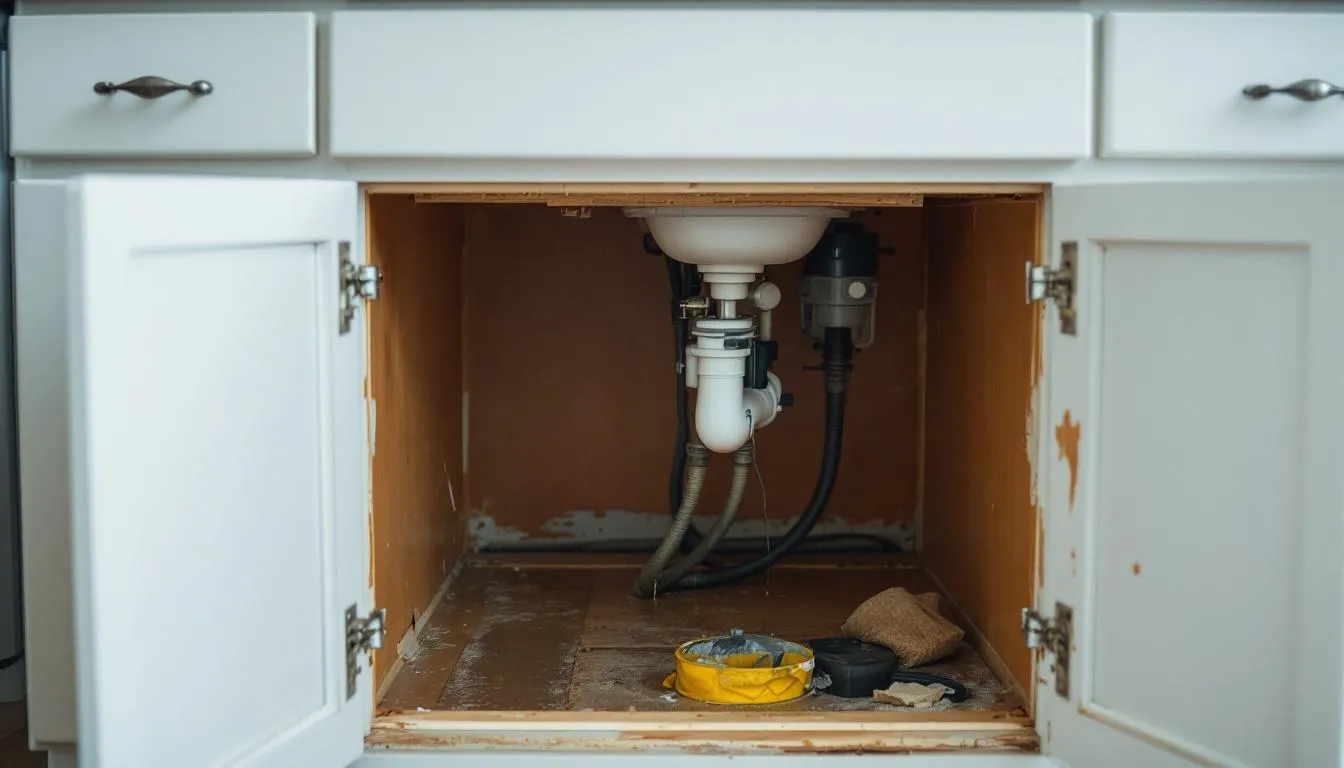
Under-sink cabinet damage is one of the most common kitchen complaints in Austin homes, driven by a combination of aging supply lines, the city's notoriously hard water — Austin sits on the Edwards Aquifer limestone system — and the high-mineral deposits that accelerate corrosion on fittings and drain connections. The problem is especially prevalent in mid-century homes in Travis Heights, Hyde Park, and Bouldin Creek where original plumbing fixtures have never been replaced. If water infiltration is ignored, the particleboard cabinet floor swells and delaminates, the damage spreads to adjacent toe-kick sections, and mold can colonize the dark enclosed space with Austin's high summer humidity accelerating the process.
Telltale Signs
Warning Signs to Watch For
- Cabinet floor beneath the sink is soft, spongy, or visibly bowed upward
- White mineral deposits or rust stains around the drain basket or supply valves
- Musty or mildew odor when opening the cabinet door
- Visible swelling, delamination, or dark staining on the cabinet sidewalls
- Finish peeling away from the interior cabinet surfaces near the plumbing connections
- Standing water or persistent moisture at the back of the cabinet even after cleaning
Root Causes
What Causes Water-Damaged Kitchen Cabinets Under the Sink?
Corroded Supply Line Fittings
Austin's hard water deposits calcium and magnesium scale inside braided supply lines and compression fittings over time, creating micro-cracks that allow a slow but continuous drip. Because the leak is hidden behind cleaning supplies in the cabinet, it often goes undetected for months, saturating the particleboard base long before the homeowner notices.
The Fix
Supply Line Replacement and Cabinet Floor Rebuild
Replacing corroded braided lines with new supply connectors, installing a leak-detection tray, and cutting out and replacing the damaged cabinet floor panel with moisture-resistant plywood restores the cabinet and eliminates the source.
Failing Drain Basket Seal
The putty or silicone seal around the sink drain basket degrades over years of thermal cycling — Austin's summers push kitchen temperatures high enough to soften and shrink older putty formulations. Once the seal breaks, every sink use directs water along the underside of the sink and directly onto the cabinet floor below.
The Fix
Drain Basket Reseating and Plumber's Putty Reseal
Removing the old drain basket, cleaning the sink flange, applying fresh plumber's putty or silicone rated for continuous water exposure, and reinstalling the basket stops the drip at its source before the cabinet base requires full replacement.
Self-Diagnosis
Which Cause Applies to You?
Check the signs you're observing to narrow down the likely root cause before your inspection.
| What You're Seeing | Corroded Supply Line Fittings | Failing Drain Basket Seal |
|---|---|---|
| Mineral crust or green corrosion visible on supply valve stems or line fittings | ||
| Water appears around the drain basket after running the sink | ||
| Cabinet floor is wet but supply lines appear dry when touched | ||
| Supply line braiding is discolored, kinked, or shows white calcium buildup | ||
| Mold growth concentrated at the rear center of the cabinet floor directly under the drain | ||
| Damage is spread across the full cabinet floor width near both supply valves |
Free Inspection
Get a Diagnosis in Austin
An on-site inspection is the only way to confirm which cause applies to your property. Free, no obligation.
(737) 237-2363Free on-site inspection
Written estimate before work starts
Serving Austin & surrounding areas
Other Problems
Also Helpful