Home › Common Problems › Cabinet Doors That Won't Close Properly
Cabinet Doors That Won't Close Properly
in Austin, TX
Cabinet doors that refuse to close flush, hang crooked, or spring back open are a daily frustration in many Austin kitchens, and the root cause is almost always related to the city's extreme humidity swings — from the muggy subtropical summers where indoor relative humidity can climb into the 70-percent range during monsoon-adjacent August storms to the dry January cold fronts that drop humidity below 20 percent. This moisture cycling causes wood cabinet door frames and box components to expand and contract repeatedly, eventually racking hinge plates out of alignment or warping door panels beyond what adjustment alone can correct. Older kitchens in East Austin craftsman homes and 1950s bungalows with original wood cabinet boxes are particularly susceptible.
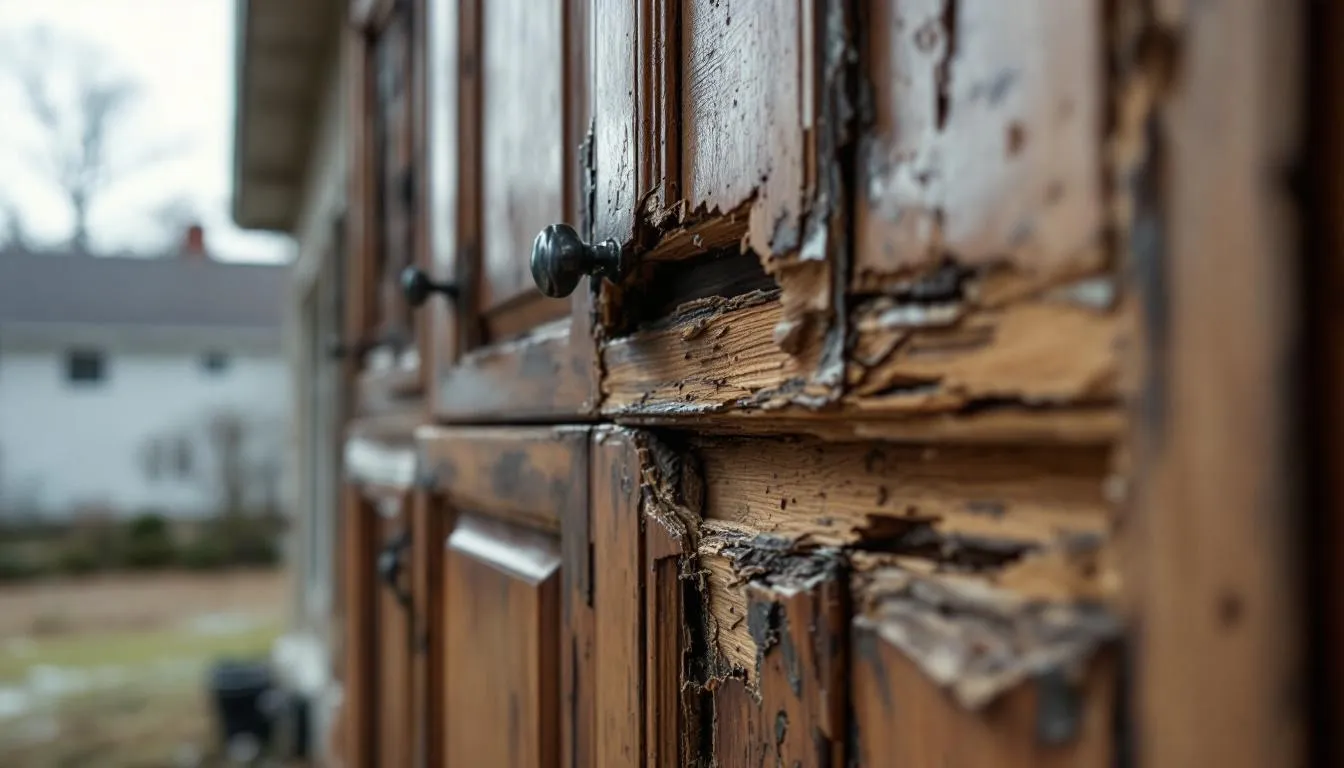
Telltale Signs
Warning Signs to Watch For
- Cabinet doors visibly hang at an angle, with one corner higher or lower than the opposite side
- Door surface bows outward or inward when viewed from the side, indicating warping
- Hinge screws have pulled loose from the cabinet face frame or door stile
- Door strikes the cabinet frame or adjacent door before closing fully
- Soft-close hardware no longer pulls the door fully shut on its own
- Gaps between door pairs are uneven — tight at the top and open at the bottom or vice versa
Root Causes
What Causes Cabinet Doors That Won't Close Properly?
Humidity-Driven Wood Expansion and Warping
Austin's summer humidity causes wood door panels and frames to absorb moisture and swell, while the dry winter months cause them to release that moisture and contract. Over several cycles, this repeated movement introduces a permanent cup or twist in the door panel, particularly in doors made from solid wood or low-grade MDF without proper moisture-resistant coatings on all six faces.
The Fix
Door Panel Replacement with Moisture-Resistant Materials
Replacing warped door panels with five-piece door frames using MDF center panels sealed on all edges and faces, or switching to thermofoil or painted MDF slab doors that are dimensionally stable in Austin's climate, eliminates the moisture uptake cycle that drives the warping.
Worn or Misadjusted European Hinges
The cup-style European concealed hinges standard on most Austin kitchen cabinets since the 1990s have three-axis adjustment capability, but the adjustment screws loosen over years of daily use and door weight leverage. When a hinge plate loses its set position, even a well-made door hangs crookedly and the soft-close mechanism cannot compensate for the misalignment.
The Fix
Hinge Adjustment or Replacement
Systematically adjusting the height, depth, and lateral screws on all hinges for a door pair — or replacing worn hinges where the adjustment range is exhausted — restores proper door alignment and re-engages the soft-close function without requiring any cabinet replacement.
Self-Diagnosis
Which Cause Applies to You?
Check the signs you're observing to narrow down the likely root cause before your inspection.
| What You're Seeing | Humidity-Driven Wood Expansion and Warping | Worn or Misadjusted European Hinges |
|---|---|---|
| Door face bows visibly when viewed from the side at eye level | ||
| Door hangs crooked but is flat — no bow or twist visible in the panel | ||
| Problem is worse during August and improves somewhat in winter | ||
| Hinge adjustment screws spin freely without holding position | ||
| Multiple doors throughout the kitchen all developed problems around the same time after a wet summer |
Free Inspection
Get a Diagnosis in Austin
An on-site inspection is the only way to confirm which cause applies to your property. Free, no obligation.
(737) 237-2363Free on-site inspection
Written estimate before work starts
Serving Austin & surrounding areas
Other Problems
Also Helpful